Showing posts with label James Scott Bell. Show all posts

Thursday, August 28, 2025

Why Real Writers Never Stop Learning: 8 Ways to Sharpen Your Craft

Edie here: Real writers never stop improving. Discover 8 practical ways to sharpen your craft, grow as an author, and stay inspired in your writing journey from Henry McLaughlin.


Why Real Writers Never Stop Learning: 8 Ways to Sharpen Your Craft
by Henry McLaughlin @RiverBendSagas

A while back, James Scott Bell posted a blog called Don't Ever Mail It In where he wrote about the attitude that we’ve reached a certain point in our writing where we don’t have to improve.

What struck me most is his definition of a real writer. He’s someone who honors the craft and never settles. 

In this blog, I’m going to expand on a couple of his points.

Thursday, October 27, 2022

Common Writing Obstacles (Part 6): Plotting


by Henry McLaughlin @RiverBendSagas

This is one more installment in a series on common obstacles writers face.

Some people say you can’t have a story without a plot. Others say you can’t have a story without characters. Both are true. I think characters are more important.

Thursday, January 6, 2022

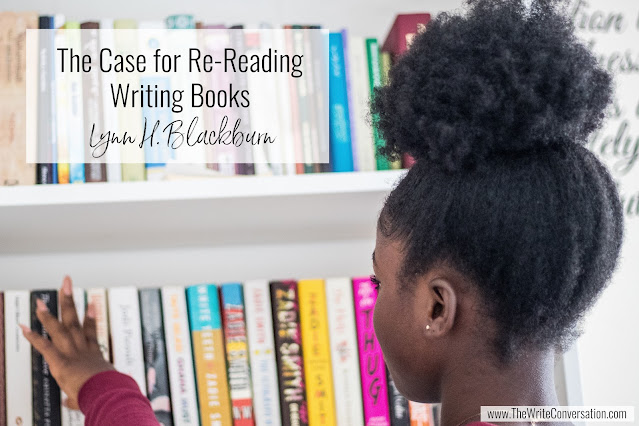
The Case for Re-Reading Writing Books


by Lynn H. Blackburn @LynnHBlackburn

For many writers, the transition from one year to the next is a time filled with evaluation and planning. We consider what we did the year before and look to the future, sketching out our goals for everything from the number of pounds we’ll lose to the number of books we’ll read. 

I tend to set my goals based on areas of weakness, not strength, which is why I rarely set a reading goal. I read a lot, so I don’t need any incentive to encourage this behavior! 

Thursday, July 2, 2015

One Writing Book Every Writer Needs, Super Structure

by Lynn Blackburn @LynnHBlackburn

Every time I see a book on “structure” or “story” I find myself bracing for the inevitable battle. If you’ve hung around with writers for long you know why, don’t you?

Someone is about to get in an argument about THE way to write. In my mind, I see a group of literary protesters. “Structure Leads to Perfect Stories!” shouts one side. “Structure Leads to Predictable Stories!” counters the other.

I see myself standing in the middle of the crowd singing, “LET IT GO!”

Don’t get me wrong. If someone has figured out how they write, I want them to tell me how they do it. I really do.

Tuesday, December 30, 2014

I’m Making a List—of the Best Writing, Publishing & Marketing Books in 2014

by Edie Melson @EdieMelson

Today’s post relies heavily on your participation.

I’m going to share the book industry books that have helped me the most this year. 

But I’m only one person and can only read so many books. Think of the to-be-read list we’ll compile when we put our heads together!

Edie’s Picks of Best Writing, Publishing and Marketing Books for 2014

Thursday, January 17, 2013

Thursday Review—The Art of War for Writers


The Art of War for Writers: Fiction Writing Strategies, Tactics, and Exercises
James Scott Bell

I collect books on writing like I collect...well...books. For me, the library I've compiled has been a big part of how I learned the craft of writing. It has also been how I've kept current in the industry. There is one particular shelf where I keep my favorites, and this small gem can be found there.

Actually, all of James Scott Bell's books on writing are there.

He's written several, seven actually and they can all be found in bookstores everywhere and of course, on his website. I've also had the opportunity to sit in his classes. If you have the opportunity to take any of his classes, don't pass it by.

Thursday, June 14, 2012

Thursday Review—Revision & Self-Editing


Revision & Self-Editing
by James Scott Bell

This week the Thursday Review is done by fellow writer, Mary Denman.

No author today has published a novel without an editing. Behind every great story is a great editor. But how do you get your manuscript in front of a busy editor to polish it if it has problems in tension, or dialogue or story line? Well, you have to become your own editor. How, you might ask? By reading James Scott Bell’s book, Revision and Self-Editing.

An accomplished novelist in his own right, Jim distills the lessons he’s learned into a fantastic book that teaches you what problems to look for in your own novel. Dialogue not right? He covers that. Struggling with POV or descriptions? Want to understand showing vs. telling? He covers that and more in the Self-Editing section. He also provides concrete examples and exercises throughout the book to teach you what he’s talking about.

But how do you revise the entire manuscript you’ve produced? Read the second half of his book. He includes the Ultimate Revision Checklist which is worth its weight in gold. He takes you step by step through the process and you’ll have a stronger novel for it.

So how do I know how great this book is? Because my copy is pink and green from highlighters. And it’s written in from cover to cover. Literally. Jim Bell inspired me to tackle the project of self-editing. And I’m glad he did.

Wednesday, February 1, 2012

Thursday Review—Conflict & Suspense


My fingernails are gone…every last one of them.

I haven’t been watching horror flicks or reading thrillers.
What I have been doing is reading the latest book on the craft from James Scott Bell (@JamesScottBell), Conflict & Suspense.

Unfortunately for my manicure, Bell uses multiple examples from books and movies that—frankly—I have avoided up to this point.
And because Bell doesn’t want to give it all away, I’m now conflicted.
Do I go ahead and read The Silence of the Lambs? Is it worth never being able to take a shower again to see Psycho?

(I won’t keep you in suspense. The answer is NO).

But don’t misunderstand. I’m not complaining.

Conflict & Suspense lived up to my high expectations. The good stuff begins in the Introduction. Don’t skip it. He makes a strong case for “making trouble” for your characters and concludes that no matter what your genre is, “trouble is your business. And conflict and suspense are the tools of the craft that will take your business to the readers.” (p. 2)

He then dives into fourteen chapters on Conflict. He covers inner conflict, ways to lace your dialogue with conflict, methods for structuring your novel with conflict in mind, how to brainstorm for conflict, and much more.

In Chapter 15, he turns his attention to Suspense. (This is where my nails lost the battle). We’re talking cliff hangers, stretching the tension, using your setting to add suspense, and how to include instant suspense in some of your low tension scenes. There’s advice on coming up with twists and how to style your dialogue to heighten the suspense.

The final chapter is only four pages—and those four pages alone are worth the price of the book. And no, I’m not going to tell you what they say. You’ll have to buy the book to find out. My copy is dog-eared and highlighted with particular emphasis on the “Do This” exercises. So if you see me in a Panera with 3x5 cards scattered all over the table, please don’t offer to help clean up the mess.
It’s just me—making some trouble.

Care to join me?
Blessings,
Lynn

Lynn Huggins Blackburn has been telling herself stories since she was five and finally started writing them down. She blogs about faith, family, and her writing journey on her blog Out of the Boat. Lynn is a member of the Jerry B. Jenkins Christian Writers Guild and the Word Weavers, Greenville. She lives in South Carolina where she hangs out with three lively children, one fabulous man, and a cast of imaginary characters who find their way onto the pages of her still unpublished novels. She drinks a lot of coffee.

Thursday, October 13, 2011

Thursday Review—NaNoWriMo

Last November, our own Lynn Blackburn posted a review ofNaNoWriMo (short for National Novel Writing Month). This year, I thought I’d give you a little heads up BEFORE November arrives.

NaNoWriMo is an idea that has exploded in popularity. The idea is that you write the first draft (minimum of 50,000 words) of a novel in one month. At first this may sound ridiculous, but many writing instructors advocate writing your first draft quickly, without editing. James Scott Bell encourages this in his book, The Art of War for Writers. I highly recommend this book, by the way and it was the very first book reviewed on this blog. Curious to learn more? Click here to read the review.

So how do you get involved with NaNoWriMo?
  • First, visit their website and set up an account.
  • Second, familiarize yourself with their site and the many things they offer.
  • Third, start brainstorming ideas. 
Yep, I’ve found it helps me to have an idea of where I’m going with my novel. I don’t want to get into the whole, plotter or pantster debate, but I highly recommend at least a glimmer of an idea before you start.

And I have the perfect place to help you get ready—My BookTherapy. This group, started by award winning author, Susan May Warren, is dedicated to help writers succeed. Last year, MBT began WriMo, a smaller group of NaNoWriMo writers and the result was phenomenal. They had contests, help groups, everything a manic novelist could need (except chocolate—and I urge you to stock up on that). This year they will continue with the contests and fellowship and I’ve also heard rumors of special WriMo recipes, organization techniques and lots of other fun. I strongly urge everyone pop over and see what they have to offer this year. You will need to register and become a voice. But there's no fee involved for general access.

Still unconvinced it’s for you? Consider this, people participate in NaNo for many reasons—many of them good—here are just a few to consider.

  • For Fun: maybe you’ve been toying with the idea of writing a novel. Here’s your time to give it a try.
  • To Jumpstart Your Next Book: if you write professionally, the work of writing can sometimes get in the way of actual writing. NaNo can help you get back on track.
  • An Accountability Group: Some of us just do better when we have to report on our progress. NaNoWriMo actually requires that.
  • A Deadline and Goal: I don’t know about you, but I can do almost anything for a month—give up chocolate, start an exercise program, get familiar with a new routine. Why not try writing a novel?
  • Company in a Lonely Endeavor: writing is a solitary pursuit and can often be intimidating and discouraging. Aligning with a group that has a shared goal and purpose helps alleviate the loneliness and helps keep us motivated.
  • To Win: yes, I admit it. I’m highly competitive and just thinking about NaNoWriMo gets my adrenalin pumping. 

I’d love to keep up with all of you who are doing NaNoWriMo, so be sure to leave a comment and let us know your NaNoWriMo name (you choose it when you register). Mine is easy to remember:
EdieMelson

Also, if you’ve participated in NaNoWriMo previously, we’d like your suggestions and comments on the experience.

So, don’t forget to join the conversation!
Blessings,
Edie

Thursday, July 7, 2011

Thursday Review—Writing Fiction for All You’re Worth

Writing Fiction for all You're Worth: 
Strategies and Techniques for Taking Your Fiction to the Next Level
James Scott Bell

A Review by Lynn Huggins Blackburn


I read a lot of books on writing. I have to. I blog about them once a month, right here at The Write Conversation. And so far, I’ve learned something valuable from each book I’ve read.

However, I can’t say they’ve all been page-turners. Useful? Absolutely. Pleasurable reading? Not always. Let’s face it. Some books on the craft of writing read more like a textbook than a novel.

But not all of them. James Scott Bell has written some of the classic writing texts of our time—Plot & Structure, Revision & Self-Editing, and The Art of War for Writers. All of which should be on your shelf if they aren’t already. And all of them downright enjoyable reading.

I follow Bell on Twitter (@JamesScottBell) and I make it a point to stop by the blog, The Kill Zone, every Sunday to read his posts.

So when I heard he had an eBook out that was a compilation of many of his previous posts on The Kill Zone as well as some new material, I was intrigued.

When I found it was available for $2.99 as a Nook or Kindle download, I was sold. Sure, I could go the The Kill Zone and spend hours hunting through months of posts. But I have a life.

Besides, there are more than blog posts included in Writing Fiction For All Your Worth. We get a peak inside Bell’s writing notebook, interviews with successful authors, and “Consider Your Worth” questions to make you think deeper about where you are as a writer.

And this book is funny. I wondered if I found some sections funny because I read them at 3AM while feeding a newborn. And just about anything can be amusing at 3AM. But a quick re-read at a more respectable hour confirmed it. This book is a fun read that’s also packed full of writing wisdom.

After a brief introduction, the book is divided into three main sections. The Writing World delves into the digital revolution and the rise of self-publishing. The Writing Life covers everything from Bell’s personal writing routine to practical and sometimes unusual methods writers use to keep their heads in the game and their fingers flying. The Writing Craft hits on first lines, last pages and everything in between.

While the bite-sized sections in this book make it easy to read in increments, you’ll find yourself wanting to read just one more, and then another. And when you’ve finished, you’ll be itching to sit down at the keyboard and write for all you’re worth.

Note: You don’t have to own a Nook or Kindle to enjoy this or any other e-book. Both Nook & Kindle are available as free downloads to your smartphone, tablet, or computer.


Lynn Huggins Blackburn has been telling herself stories since she was five and finally started writing them down. On her blog Out of the Boat she writes about faith and family while her blog Perpetual Motion documents the joys and challenges of loving and rearing a child with special needs. A graduate of Clemson University, Lynn lives in South Carolina where she writes, reads, knits, takes care of three amazing children, one fabulous man and one spoiled rotten Boston Terrier.
Follow Lynn on Twitter @lynnhblackburn

Wednesday, October 6, 2010

Thursday Review - Plot and Structure

Join me in welcoming back Lynn Blackburn as our First Thursday of the Month Reviewer!

Plot and Structure
by James Scott Bell

The first writing book I bought was Plot and Structure by James Scott Bell. I could have borrowed it from the library, but I’m glad I didn’t. And, no, you may not borrow my copy. You may go out and buy your own. They aren’t expensive and if you give up a few mochas, you’ll have enough to order a copy and have change leftover.

My book is highlighted and dog-eared. Some pages have stains which I can only presume are chocolate. Because, let’s face it, when studying up on the craft, you need fuel. And chocolate is my writing fuel of choice. (Followed up by mochas, but I didn’t want to mention that because you may have to do without them for a few weeks since you’ll be buying this book soon.)

Now, some people balk at the idea of structure in their writing. And, believe it or not, I can understand that. I want to write the story in my head without worrying about whether or not it fits standard conventions. I mean, writing is art.

Isn’t it?

Sure it is.

But here’s where the real world crashes into my fantasy land.

Publishing is a business.

And as much as I love stories and believe a good story will carry a reader through a poorly written book, the reality is that publishers buy books that will sell. And most readers want an unpredictable storyline but a predictable progression from beginning to end. They may not realize it, but they do.

Now that you’re sufficiently depressed, grab a bite of dark chocolate and take heart.

Plot & Structure is a funny read and it’s full of ideas. Ideas to take the story in your head and structure it so it flows naturally for the reader. Suggestions for how to structure your plot if you are a detailed outliner or an intuitive, go with the flow kind of writer. As well as a few ideas for what to do when you want to throw the whole thing out the window.

One of the best parts about writing is that it is art. You can break the rules. But you need to know what they are before you break them.

Besides, you may find that the story in your head, the one that flows out of you without regard to rules, already has all the key components you need to structure a fabulous plot!

So what about you? Do you plot? Outline? Ignore conventions?

Don’t forget to join the conversation!
Blessings,
Lynn

Lynn Huggins Blackburn has been telling herself stories since she was five and finally started writing them down. On her blog Out of the Boat she writes about faith and family while her blog Perpetual Motion documents the joys and challenges of loving and rearing a child with special needs. A graduate of Clemson University, Lynn lives in South Carolina where she writes, reads, knits, takes care of two amazing children, one fabulous man and one spoiled rotten Boston Terrier.

Friday, September 17, 2010

Thursday Review - ACFW Bound - Part Two

It's been an amazing day . . . and I'm exhausted! Those of you who've been to writing conferences know what I mean. It's an "I can't stuff any more knowledge into my brain" sort of tired.

This moring we had the priviledge of learning from James Scott Bell from 8am until 12. I've taken his class twice before, but I learn so much, it all seems brand new. I reviewed his third book on writing, The Art of War for Writiers in my very first Thursday review, if you're curious why I think he's so great.

Then lunch with my newest friends  fellow writers MBT Ponderers. An amazing group of encouraging, praying, talented writers. Several of the group are Genesis finalists so I feel like I have a vested interest in who wins on Sunday evening.

Then, tonight we heard from Tim Downs. He delivered a great keynote. I can hardly wait to gett some of his books to read!

Supper (Jim Bell claimed not to know what "supper" was - said he'd heard of dinner, but not supper - he's from CA, need I say more?) was really good. I can already tell I'm going to eat way too much while I'm here. Tonight their were editor panels and tomorrow night will be agent panels.

Like I said, my mind has turned to mush. Tomorrow my first appointment is with editor Jeff Gerke - I've been practicing my pitch all evening And thanks to my MBT Ponderer friends it's honed to a razor sharp edge.

Tomorrow is packed with appointments, meals and workshops, I miss all my Blue Ridge buddies, but Lisa Carter and I are representing!

I'll be back tomorrow with more updates.
Don't forget to join the conversation!
Blessings,
Edie

Wednesday, August 4, 2010

Thursday Review, Writing for the Soul

A couple of weeks ago I introduced you to my guest blogger and writing buddy, Lynn Blackburn. Well, you're in for a treat. Lynn has agreed to continue to entertain us with her wit and wisdom the first Thursday of every month. Join me in welcoming her to The Write Conversation family!

Writing for the Soul
by Jerry B. Jenkins

I thought writing a review of Writing for the Soul by Jerry B. Jenkins would be easy.

Until I opened it and found the list of authors who recommended Writing for the Soul. I experienced several days of mind-numbing terror. What can I add? Let’s face it, when Francine Rivers, James Scott Bell and Angela Hunt (along with many others) say you should read the book . . . well, it won’t hurt my feelings if you stop reading now to save yourself some time and energy and go buy the book.

But, as you are a glutton for punishment and have continued reading, I’ll tell you that when I picked the book from its spot on my desk (along with my slowly growing collection of writing books) I intended to skim through it to refresh my memory and then whip up a review.

Instead, I read it straight through. And I learned more this time than I did the first two times I read it.

Writing for the Soul was the first “writing” book I read. I found it at my local library a week or so after completing the first draft of my first novel and a day or so after it occurred to me that it might be a good idea to learn something about writing if I was going to be a writer. (Yes, you read that right and yes, I know that I’ve gone about everything as backward as possible.)

After finishing Writing for the Soul, I faced the harsh reality that I knew nothing about writing and that my first draft was riddled with errors that would mark me for the amateur I was.

I was disappointed, but not hopeless because the solutions for many of my mistakes were contained in Writing for the Soul. This book covers a wide-range of topics, from the importance of selecting the right POV to the importance of sitting in the right chair.

Writing for the Soul is funny, the wisdom doled out in manageable slices, and the hard realities sandwiched between entertaining anecdotes from Jerry B. Jenkins’ career. This is a book I’ll read at least once a year. And I’ll pull it off the shelf for years to come anytime I need a quick refresher course or to be reminded that while writing is a sacred calling it’s also hard work—even for Jerry B. Jenkins.

Thursday, May 13, 2010

Thursday Review - Revision and Self Editing

Revision & Self-Editing
by James Scott Bell

This week the Thursday Review is done by fellow writer, Mary Denman.

No author today has published a novel without an editing. Behind every great story is a great editor. But how do you get your manuscript in front of a busy editor to polish it if it has problems in tension, or dialogue or story line? Well, you have to become your own editor. How, you might ask? By reading James Scott Bell’s book, Revision and Self-Editing.

An accomplished novelist in his own right, Jim distills the lessons he’s learned into a fantastic book that teaches you what problems to look for in your own novel. Dialogue not right? He covers that. Struggling with POV or descriptions? Want to understand showing vs. telling? He covers that and more in the Self-Editing section. He also provides concrete examples and exercises throughout the book to teach you what he’s talking about.

But how do you revise the entire manuscript you’ve produced? Read the second half of his book. He includes the Ultimate Revision Checklist which is worth its weight in gold. He takes you step by step through the process and you’ll have a stronger novel for it.

So how do I know how great this book is? Because my copy is pink and green from highlighters. And it’s written in from cover to cover. Literally. Jim Bell inspired me to tackle the project of self-editing. And I’m glad he did.

Wednesday, February 17, 2010

Thursday Reviews


Welcome to Thursday Reviews on The Write Conversation

Every Thursday I'll be posting a review pertaining to writers. It may be a review of a book, software, online class or conference relevent to the writing industry. Sometimes we'll talk about fiction, other times we'll discuss non-fiction. Our goal - to help each other become better writers. I'm inviting you to join the conversation as well. Let me know what you've discovered to help you. Ask for the help you haven't been able to find. None of us has all the answers alone, but when we band together we're unstoppable!


The Art of War for Writers
James Scott Bell

Writing publishable fiction takes the planning and preparation of an invasion campaign. From fighting self doubt to navigating the mine fields of the industry itself, victory can seem unattainable. As a successful novelists himself, Jim Bell knows that battle first hand. His newest book on writing is a work packed full of practical strategies and focused exercises, guaranteed to equip any writer for the conflict ahead. This small book, written in digestible bites, translates Sun Tzu's "The Art of War" into an indispensible handbook for novelists.

Personally, I keep James Scott Bell’s other books on writing within easy reach in my office, where they show signs of being well used. I know this latest release will join them. I recommend it wholeheartedly to aspiring and veteran novelists alike.


Don't forget to keep the conversation going -
Blessings,
Edie